I Built a Prototype They’d Never Ship. That Was the Job.
A benefits administration platform where the AI assistant was the client's entire bet. The requirements had been written by sales and described features, not work. HR admins and brokers were both named and neither defined.
I was the only designer. The plan was one week discovery, one week design. No access to the dev environment. No brand assets. A clickable prototype was the deliverable, and it was always a POC for their devs to review.
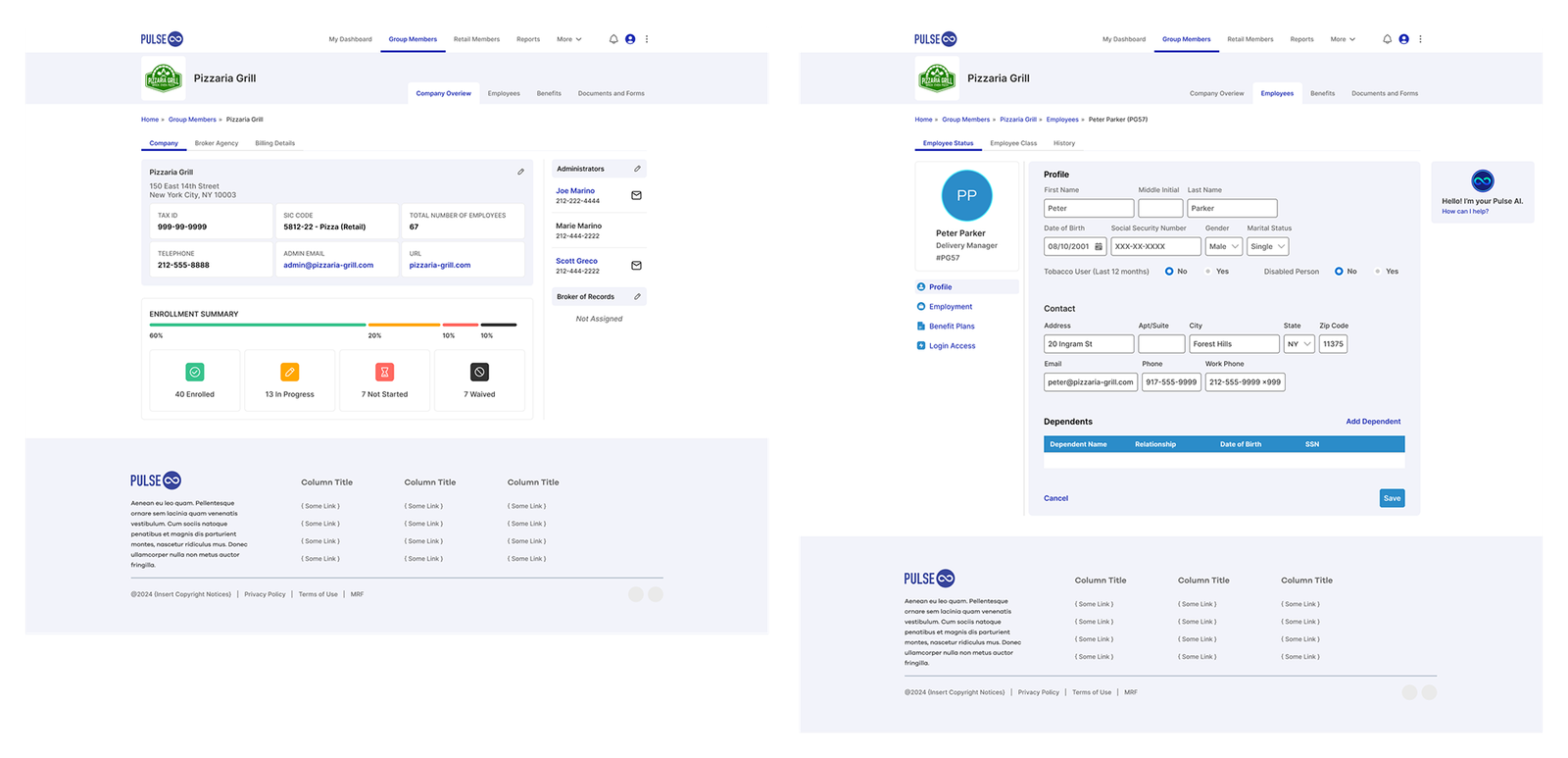
Day two, a collaborative concept session turned into a swirl of stakeholder preferences with no shared user goals underneath them. Three groups, three pictures of what the assistant was for.
The photo of that whiteboard became my evidence, and I used it to argue the two-week plan was fiction. We got six weeks.
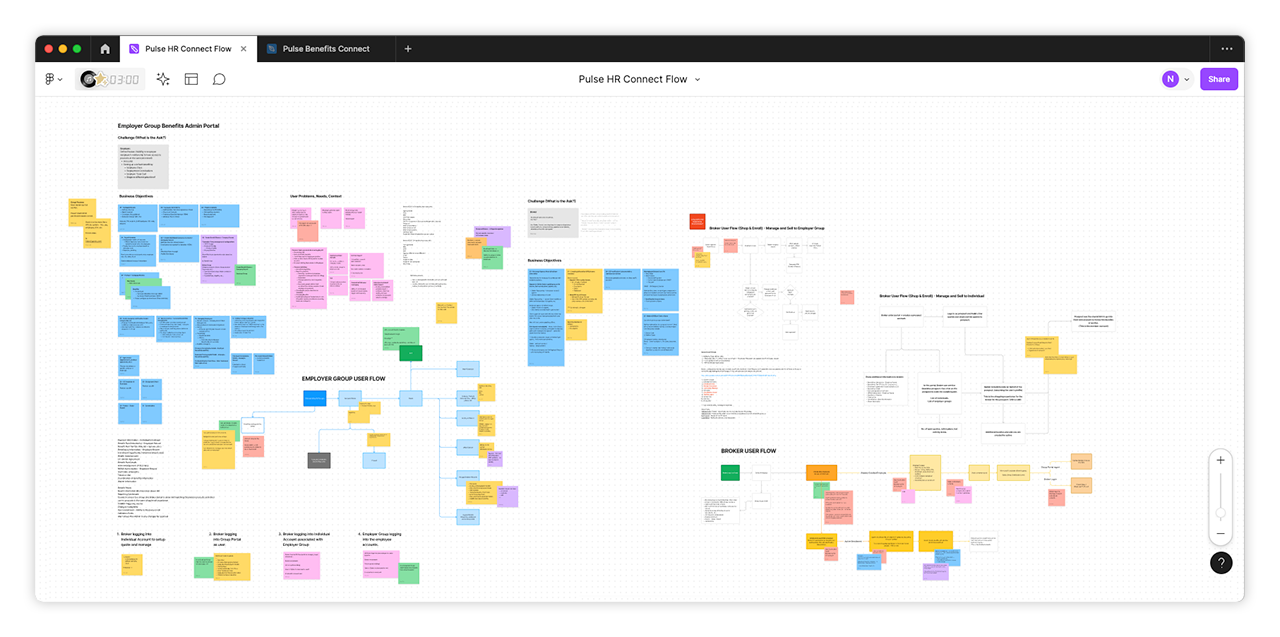
Then the actual work: writing the personas nobody had written. HR admins and brokers are different products sharing a shell-- different permissions, different urgency, different failure modes. I mapped jobs-to-be-done for each and built the IA around administrative function: roster, enrollment, policy updates. Shallower than the underlying system, so admins wouldn't have to think in database tables.
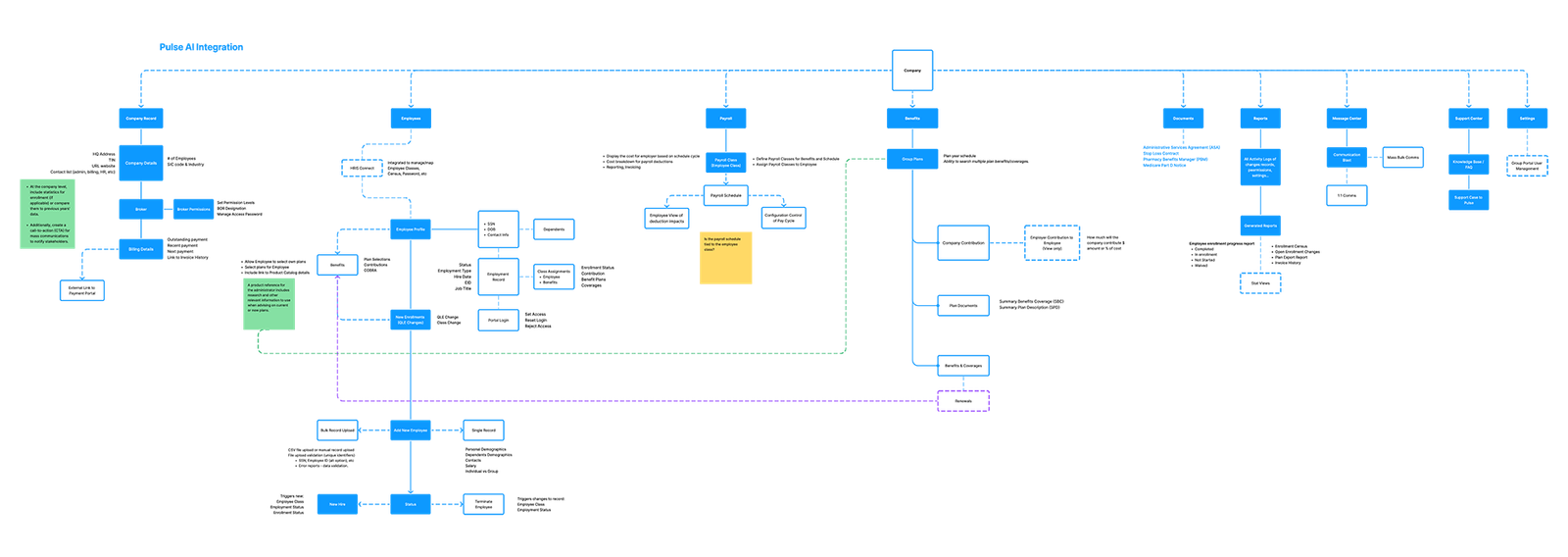
Two decisions shaped everything downstream.
Define the assistant before drawing it. The assistant was the whole vision and the least-defined thing in the room. I scoped it to retrieval and guidance inside a task, not autonomous action. A scenario made it real:
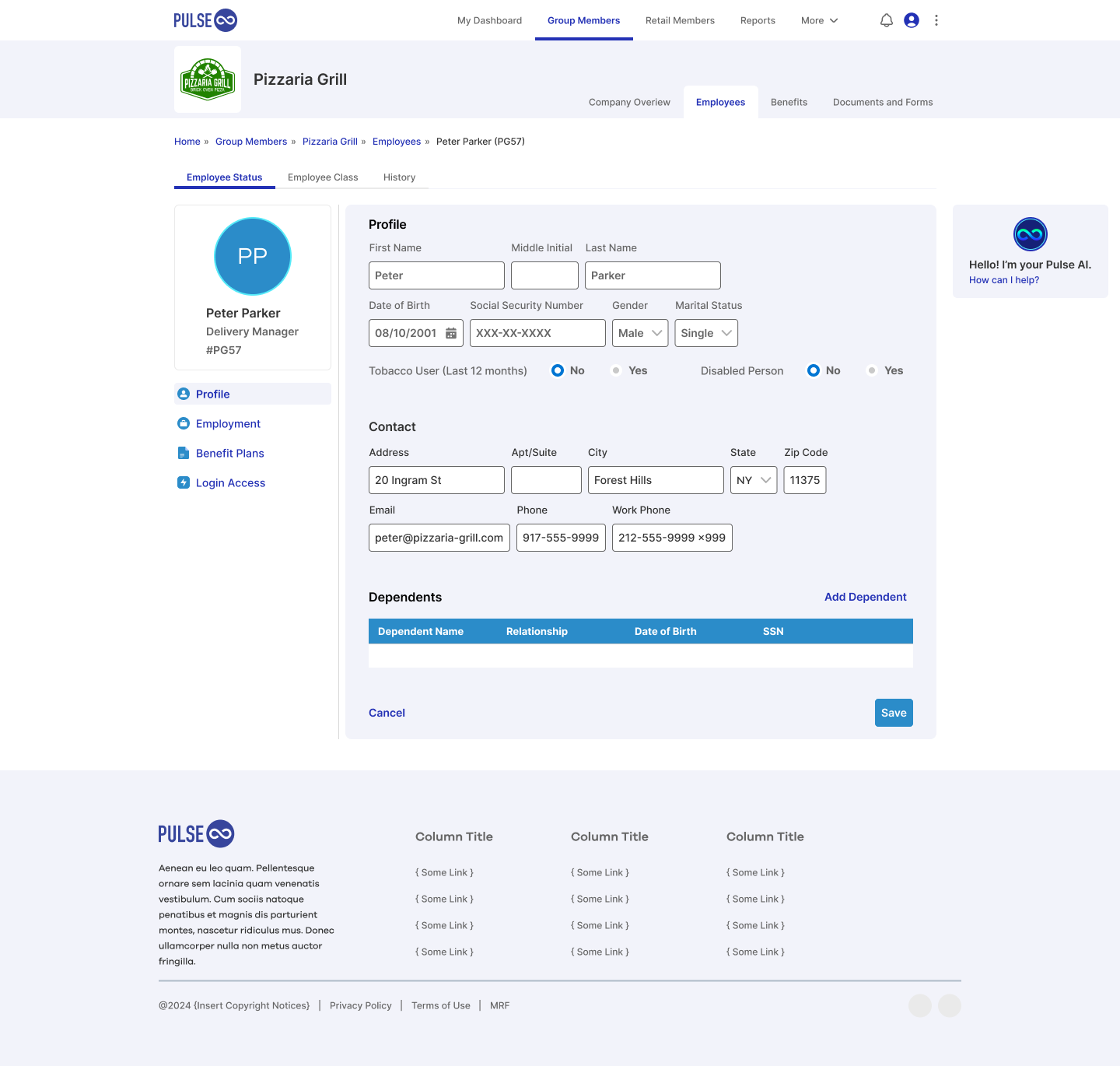
Peter just got married, his HR admin needs to add a spouse, the assistant surfaces required documents, pulls his existing record so nothing gets re-typed, and tracks the deadline. Not a chatbot bolted to the side. A prompt inside a task the admin was already doing.
Build on Salesforce Health Cloud + LWC, and plan to throw it away. No dev access meant I couldn't design against their real component library. So I used the client's platform stack as a stand-in. Fast to assemble, credible to their engineers, and critically, I knew it wouldn't match their actual brand and didn't try to make it. The job was getting three stakeholder groups to agree on a workflow, not producing final UI.
That distinction is why the prototype worked as a decision tool.
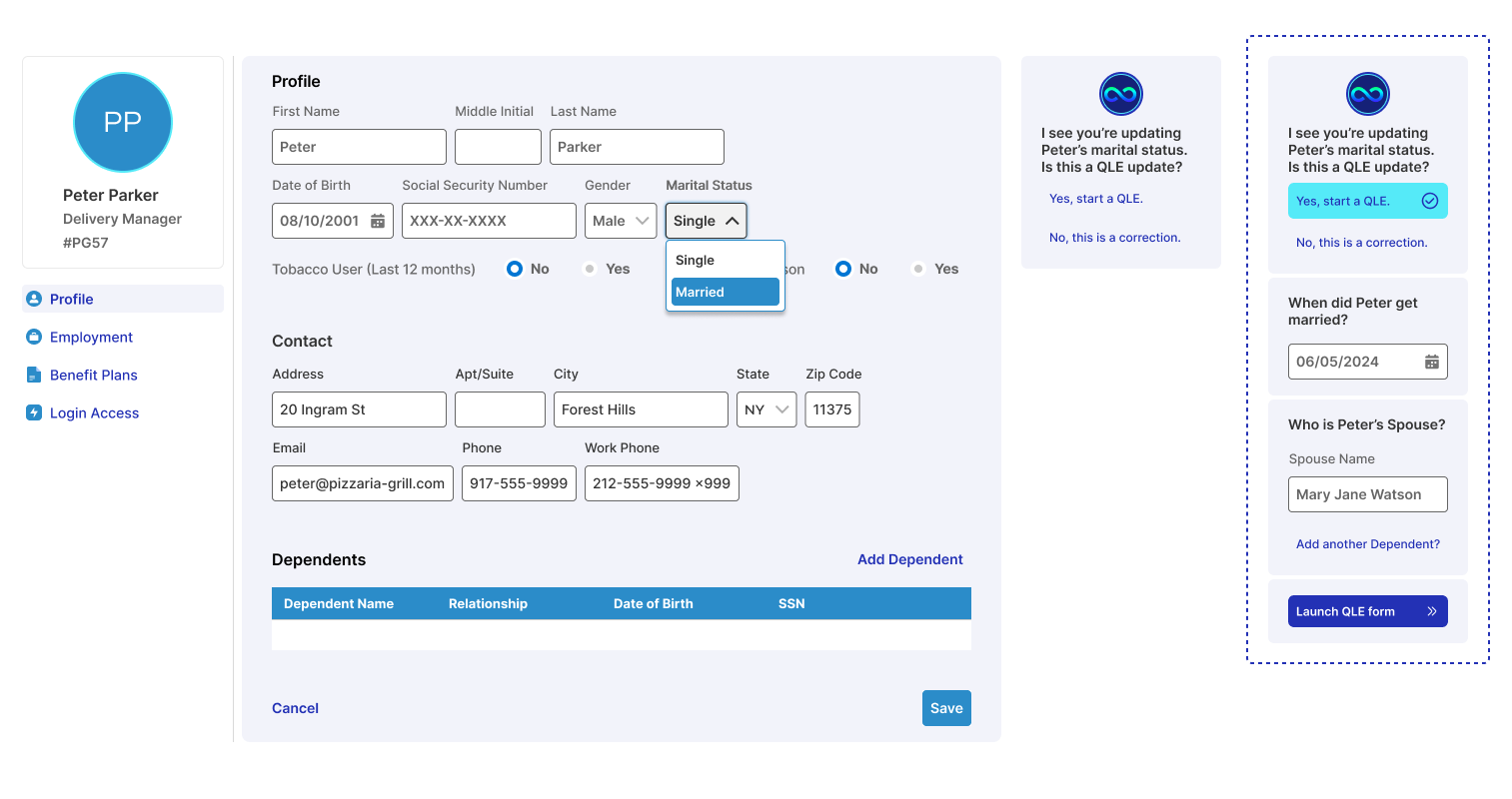
Personas, journeys, IA, flows, and a clickable prototype covering the three core admin functions with the assistant embedded in the QLE flow.
It did what it was built for. Stakeholders signed off on the flows. Reviews stopped being arguments about features and became arguments about workflow, a better argument, because it has users in it. Two questions surfaced and correctly stayed open: whether the flows matched how brokers actually work, and whether retrieval could meet the latency the flow implied.
About six weeks in, the agency's full-time designer became available. I briefed him and the offshore team on the direction, the decisions behind it, and what was still unresolved.
I was told roughly 99% of my designs wouldn't survive. That was expected. I'd built on a platform design system rather than their brand, and a brand-agnostic POC is not a spec. The permanent designer inherited a direction, a set of agreed workflows, and an explicit list of open questions-- which is a much better starting position than a blank page and a bad whiteboard.
What I'd do differently: get HR admins and brokers on a call in week one. Stakeholders gave me a direction; users would have given me a check on it. And ask for the six weeks on day one instead of spending a session proving it.
What the work actually was: standard artifacts, sequenced well. Discovery before design. The assistant defined before it was drawn. A design system chosen for speed over fidelity, deliberately. The prototypes didn't ship and weren't supposed to. The sign-offs did.