Killing the Spreadsheet: An Intraday P&L Redesign
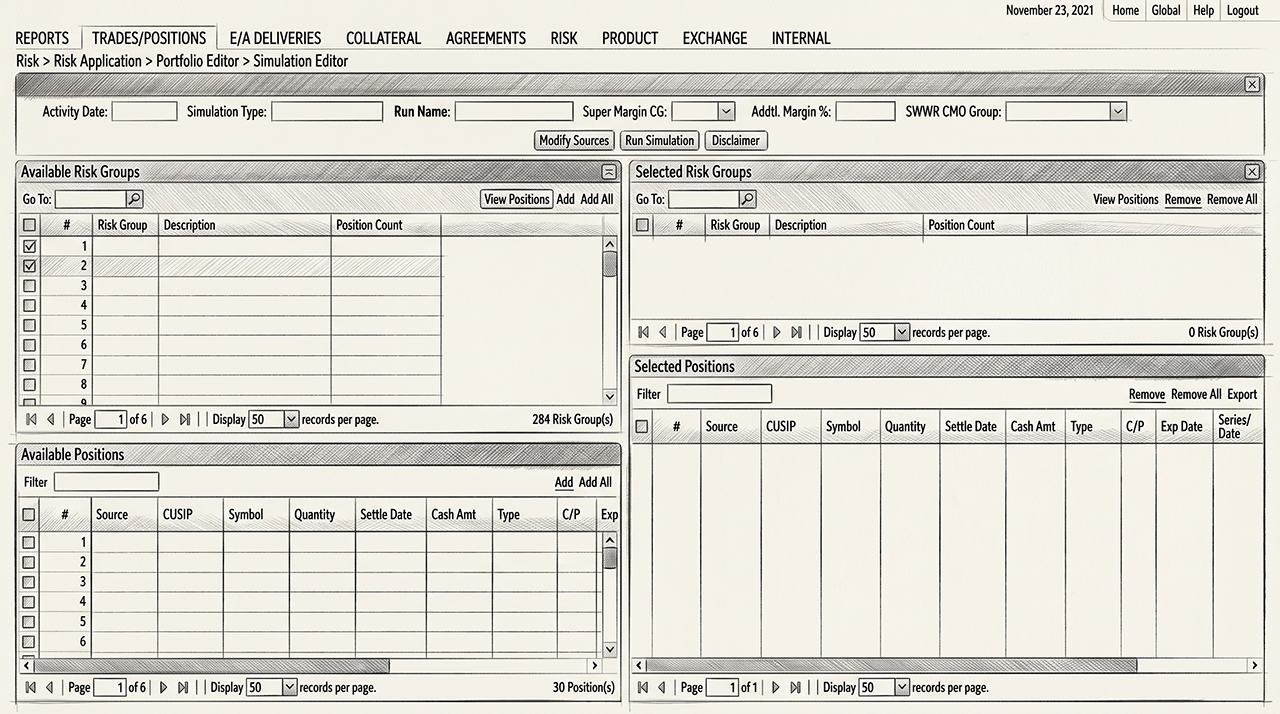
A financial clearing house ran intraday P&L risk monitoring on an application that gave analysts the data but not the answers. To investigate a threshold breach, analysts copied numbers into spreadsheets, chased context over email, and stitched the picture together themselves. Historical records were hard to find. Decisions left no trace.
I worked with the risk team and the Lead BA to find where the workflow actually broke. The finding that changed my approach: analysts weren't fighting individual screens. They were fighting the gaps between them. So I stopped designing screens and started designing the path from something breached to decision made.
Note: UI recreated and data sanitized to protect proprietary information.
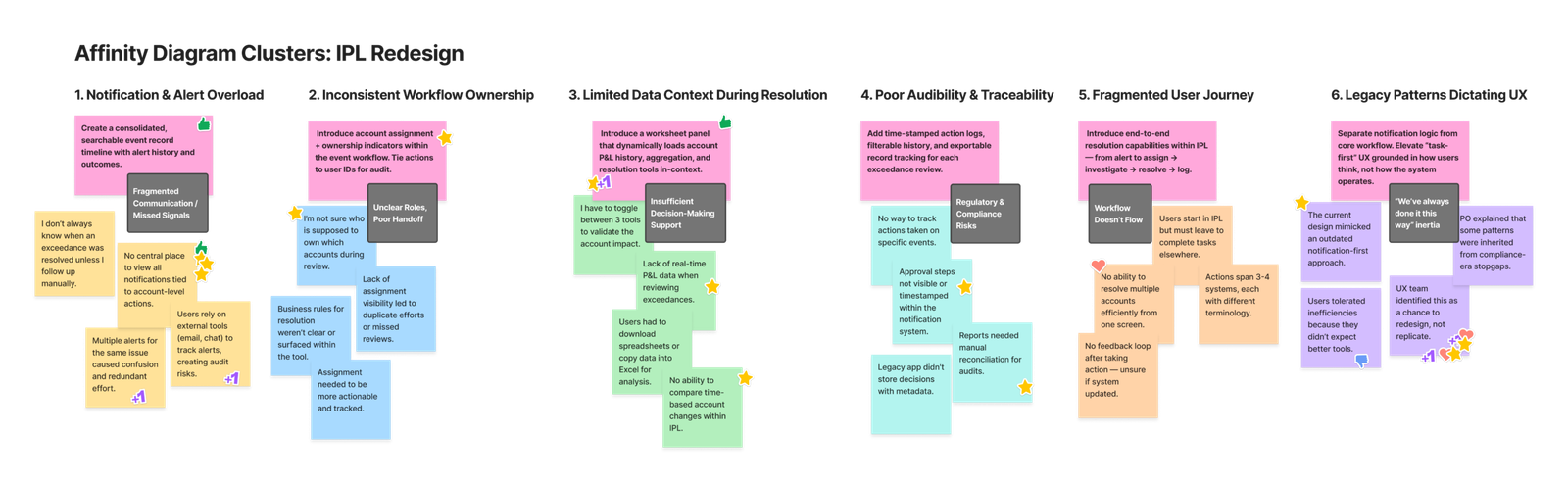
I translated research insights into connected user flows and interactive Figma prototypes. The redesign focused on three critical stages: finding historical risk events, managing bulk flagged accounts, and investigating root causes behind threshold breaches.
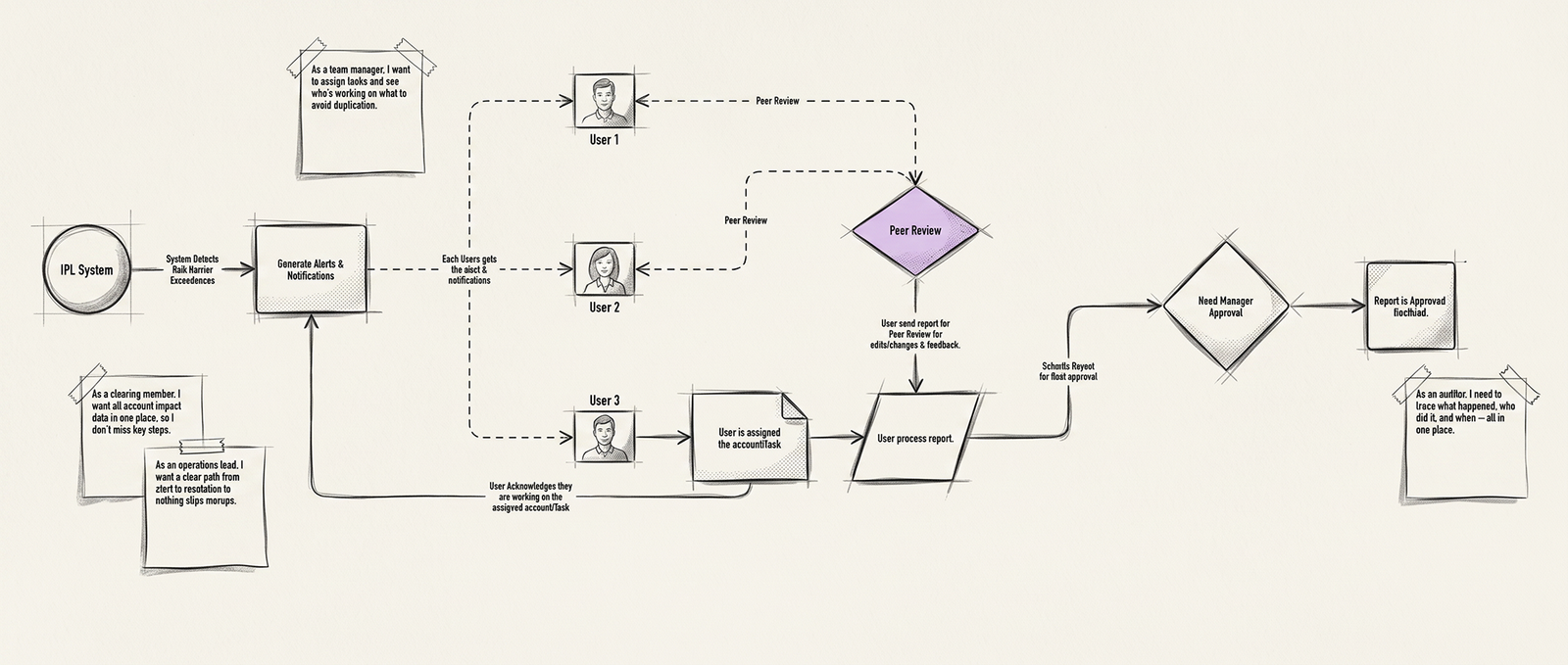
Caption: End-to-end user flow mapping risk detection through to bulk resolution.
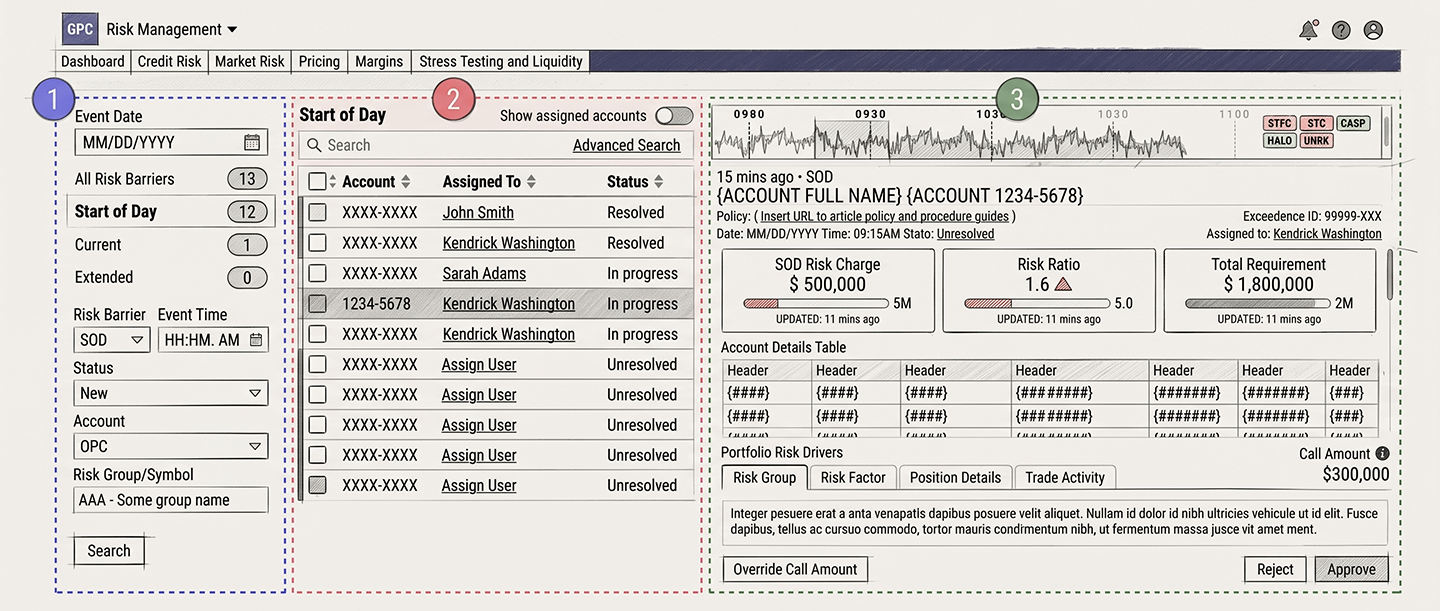
The redesign needed to accommodate an established technical environment and existing shared components. I collaborated with the development team to assess dependencies, clarify implementation constraints, and prepare the designs for handoff.
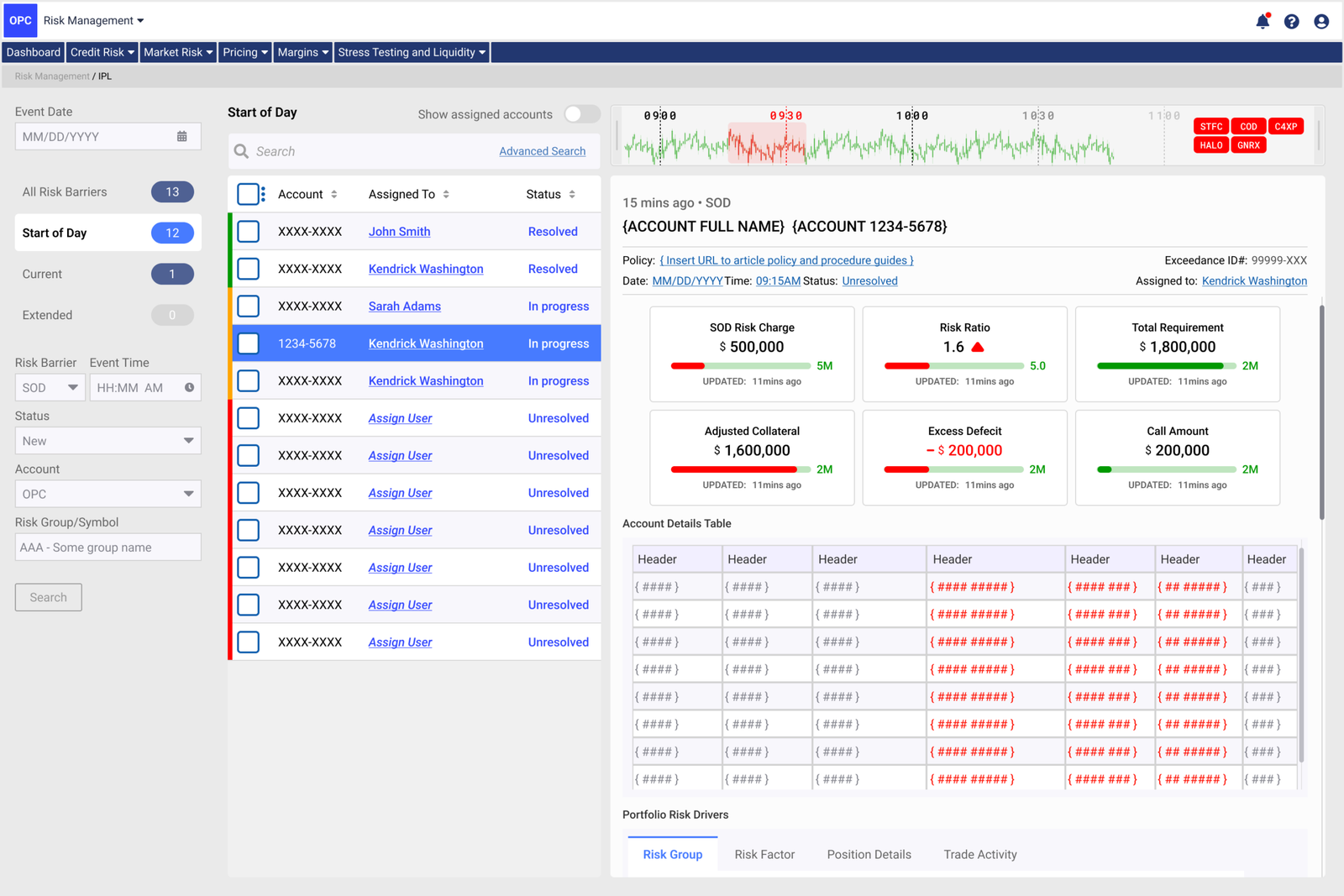
A freeze was coming. If the designs weren't approved and handoff-ready before it lifted, the work would slip a full cycle.
That left three weeks to get stakeholder sign-off, resolve the notification debate, and confirm dependencies with engineering. Every review had to move the work forward.
Presenting an interactive, end-to-end prototype helped stakeholders evaluate the redesign in the context of analysts’ daily responsibilities, rather than as a collection of isolated screens.
Facilitating stakeholder buy-in: The prototype showed how record discovery, risk investigation, and account management connected into a cohesive workflow. It gave the Product Manager and Lead Business Analyst a concrete basis for evaluating the solution and aligning on its direction.
Aligning with engineering: Walking through interactions and edge cases helped the development team clarify intended behavior, surface implementation considerations, and confirm requirements before development began.
We made the window. The designs were approved, specified, and handed off, ready for development the day the freeze lifted.
The end-to-end prototype and redesign secured stakeholder buy-in, establishing a shared direction for the proposed IPL experience. The redesigned framework and specifications subsequently moved into development. I left the team before production delivery, so the final implementation and operational impact remain unknown.